Córdoba: Where Three Faiths Shaped One Extraordinary City
Once the brilliant capital of Islamic al-Andalus, Córdoba became a meeting point for Muslim, Jewish, and Christian traditions. Its mosques, synagogues, palaces, and hidden courtyards reveal a complex story of knowledge, coexistence, rivalry, and transformation that still defines the city today.
By Lisbon Gems Tours
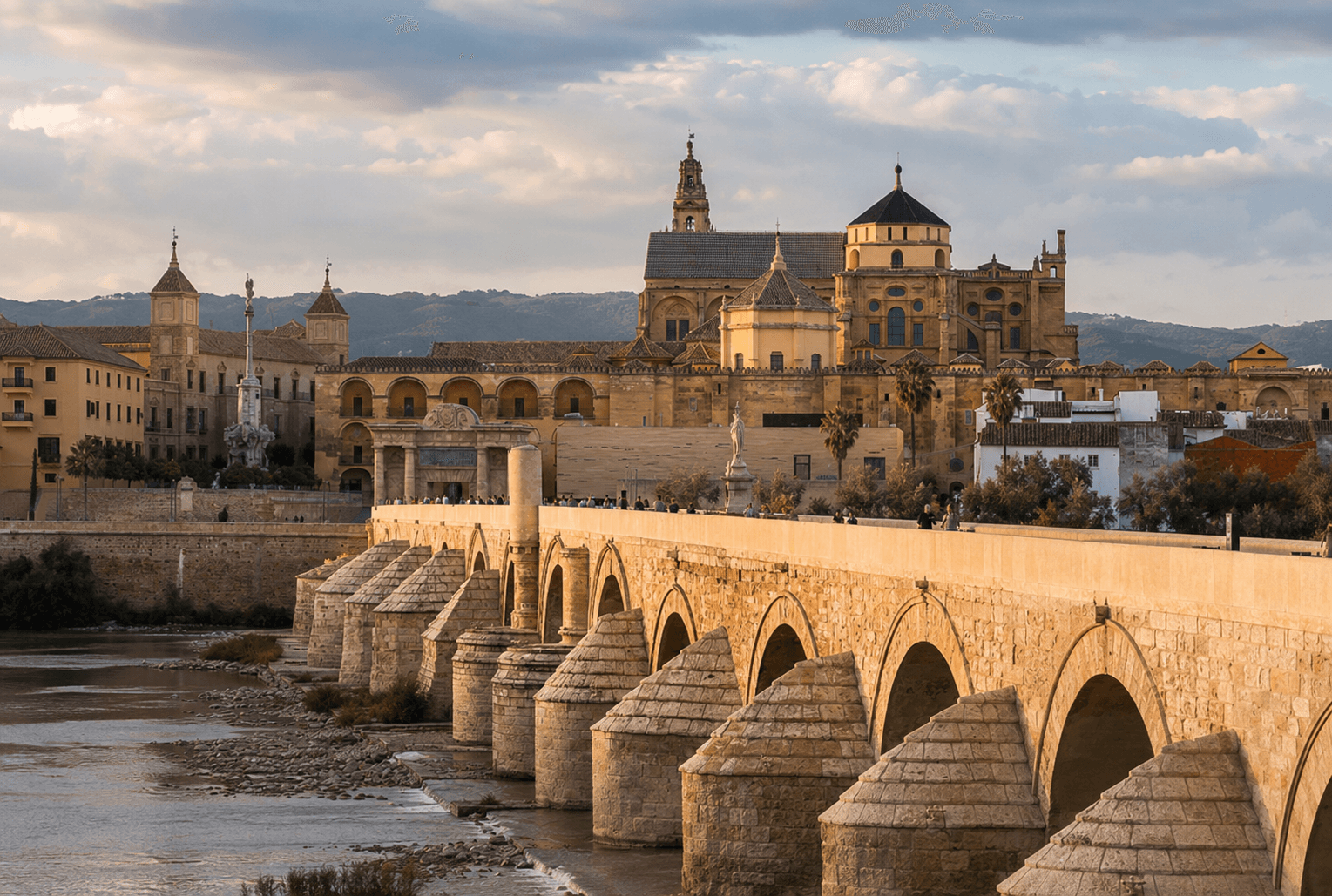
Walk through Córdoba early in the morning, before the streets fill with visitors, and the city seems to speak in several voices at once.
Church bells echo above narrow lanes shaped by Islamic urban design. Hebrew inscriptions survive inside a medieval synagogue. At the heart of the city, a Christian cathedral rises from within one of the greatest mosques ever built.
Few places in Europe preserve so many layers of faith, power, and memory within such a small space.
Córdoba is often described as the City of Three Cultures: Muslim, Jewish, and Christian. The expression evokes an inspiring period of cultural exchange, but the real story is richer and more complicated than a simple tale of perfect harmony.
There were moments of cooperation and intellectual brilliance, but also periods of inequality, conflict, conversion, and persecution.
That complexity is precisely what makes Córdoba extraordinary.
The capital of al-Andalus
After the Muslim conquest of the Iberian Peninsula in the early eighth century, Córdoba gradually became one of the most important cities of the Islamic world.
In 756, Abd al-Rahman I established an independent Umayyad emirate in Córdoba. In 929, Abd al-Rahman III proclaimed the Caliphate of Córdoba, placing the city at the centre of political power, diplomacy, commerce, science, and culture in the western Mediterranean.
At its height, Córdoba was admired for its paved streets, public baths, libraries, gardens, workshops, and centres of learning.
Scholars studied medicine, mathematics, astronomy, law, philosophy, and poetry. Ideas travelled through the city from the Islamic world, the classical past, North Africa, and the wider Mediterranean.
UNESCO describes Córdoba between the eighth and tenth centuries as one of the principal urban and cultural centres of the Western world.
A forest of arches
The greatest symbol of this period is the Great Mosque of Córdoba.
Its construction began under Abd al-Rahman I in the eighth century and was expanded by successive rulers. Inside, hundreds of columns support the famous red-and-white double arches, creating the impression of an endless stone forest.
The building absorbed influences from Roman, Visigothic, Byzantine, Syrian, and Islamic traditions. Its architecture became one of the most influential achievements of the medieval world.
The richly decorated mihrab marked the direction of prayer and reflected the sophistication of the Córdoba Caliphate. Light, geometry, calligraphy, and colour combined to create a space intended to inspire both devotion and wonder.
But the building’s story did not end with Islamic rule.
A cathedral inside a mosque
In 1236, King Ferdinand III conquered Córdoba for the Christian Crown of Castile.
The Great Mosque was consecrated as a cathedral. Over the following centuries, Christian chapels, royal tombs, a choir, and a Renaissance cathedral nave were constructed within the former Islamic prayer hall.
The minaret was eventually enclosed within a Christian bell tower.
Rather than completely replacing the mosque, the new Christian rulers transformed it. The result is not one monument beside another, but two sacred traditions occupying the same extraordinary structure.
Today, visitors can stand beneath Islamic arches and look directly toward a Christian high altar.
The Mosque–Cathedral is therefore more than an architectural masterpiece. It is the physical record of Córdoba’s changing identity, preserved in stone.
The Jewish Córdoba
The city was also home to an important Jewish community.
Jewish scholars, physicians, merchants, translators, and officials participated in Córdoba’s intellectual and commercial life, although their security and social position varied considerably under different rulers.
The most celebrated Jewish figure associated with Córdoba is Moses Maimonides, born in the city in 1138. He became one of the most influential Jewish philosophers, legal scholars, and physicians in history.
His life also reveals the limits of the idea of uninterrupted peaceful coexistence. His family left Córdoba following the arrival of the Almohads, whose religious policies placed intense pressure on non-Muslim communities.
Today, a statue of Maimonides stands in the Judería, Córdoba’s historic Jewish quarter.
Visitors can also enter the small Córdoba Synagogue, built in the 14th century after the Christian conquest. Its Hebrew inscriptions and delicate Mudéjar decoration reflect the cultural interaction that continued between Jewish, Islamic, and Christian artistic traditions.
After the expulsion of Spain’s Jews in 1492, the synagogue was converted to other uses. It is now one of only a few surviving medieval synagogues in Spain.
Coexistence—but not equality
The Spanish word convivencia, meaning living together, is frequently used to describe medieval Córdoba.
It is an attractive idea, but it must be understood carefully.
Muslims, Jews, and Christians did share the city over long periods. They exchanged knowledge, translated texts, adopted artistic influences, conducted business, and sometimes served the same rulers.
Yet they did not always live as equals.
Religious minorities could face special taxes and legal restrictions. Political change often brought greater tolerance or harsher persecution. Communities that flourished under one ruler could become vulnerable under the next.
After the Christian conquest, Muslims and Jews remained part of Córdoba’s society for a time, but pressure toward religious uniformity steadily increased. The Spanish Inquisition was established in the late 15th century, Jews were expelled in 1492, and many Muslims were later forced to convert or leave.
Córdoba’s history is therefore not a perfect story of harmony.
It is a story of people meeting, influencing one another, and creating extraordinary things—while also living with the tensions of power, faith, and political change.
Knowledge crossing religious boundaries
One of Córdoba’s greatest legacies lies in the movement of ideas.
During the medieval period, scientific, philosophical, and medical works travelled between Arabic, Hebrew, Latin, and other languages. Muslim, Jewish, and Christian thinkers inherited knowledge from ancient Greece and Rome, developed it further, and transmitted it across Europe and the Mediterranean.
The intellectual world connected to Córdoba produced figures such as the Muslim philosopher Averroes and the Jewish philosopher Maimonides.
Although they belonged to different faiths and followed different paths, both confronted similar questions: How should reason and revelation coexist? What is the relationship between philosophy, medicine, law, and faith?
Their work would influence intellectual traditions far beyond Spain.
This may be Córdoba’s most powerful lesson: cultures do not develop in isolation. They grow through encounters, translations, disagreements, and shared curiosity.
A city written in layers
The legacy of the three cultures is not confined to a single monument.
It appears in the winding streets of the Judería, the courtyards filled with flowers, the Alcázar of the Christian Monarchs, the Roman bridge, the former minaret hidden inside a bell tower, and the Arabic-inspired decoration of Christian buildings.
Even Córdoba’s architecture demonstrates how one culture could reuse, reinterpret, and preserve the work of another.
The city does not present history as a straight line.
It presents it as a collection of layers—Roman beneath Visigothic, Islamic beside Jewish, and Christian built within Muslim.
The real meaning of Córdoba
Córdoba should not be remembered merely as a place where three religions once occupied the same streets.
Its deeper importance lies in what those encounters produced.
They created architecture unlike anything else in the world. They generated advances in medicine, philosophy, astronomy, literature, and law. They left a cultural language that cannot be described as exclusively Muslim, Jewish, or Christian.
Córdoba reminds us that coexistence can produce beauty and knowledge, but also that tolerance is fragile.
Its greatest monument expresses both truths.
Inside the Mosque–Cathedral, no single chapter has completely erased the one before it. The arches, chapels, inscriptions, columns, and altars remain together, preserving the complex memory of a city shaped by many hands.
Córdoba is not simply where three civilizations once lived.
It is where their stories became inseparable.
Previous article
The Knights Who Never Disappeared: How the Templars Survived in Portugal
Across Europe, the Knights Templar were arrested, persecuted, and officially dissolved. In Portugal, however, their story followed a different path. Protected by King Dinis, their legacy was transferred to the Order of Christ and later became connected to the voyages that carried Portugal across the oceans.
Next article
A Night Beneath a Billion Stars: The Magic of Morocco's Sahara Desert
There are luxury hotels, and then there is the Sahara. As the sun sets behind the golden dunes of Erg Chebbi, silence replaces the noise of the modern world. Beneath one of the clearest night skies on Earth, the Moroccan desert offers an experience that is less about travel and more about rediscovering wonder.
More from the journal
Other stories you might like

Itinerary Design
The Secret Recipe That Has Been Guarded for Nearly 200 Years
Behind every Pastel de Belém lies a remarkable story of monks, royal history, political change, and one of Portugal's best-kept culinary secrets. Discover how a centuries-old recipe survived revolution to become the country's most iconic pastry.
Mysticism & Farytale
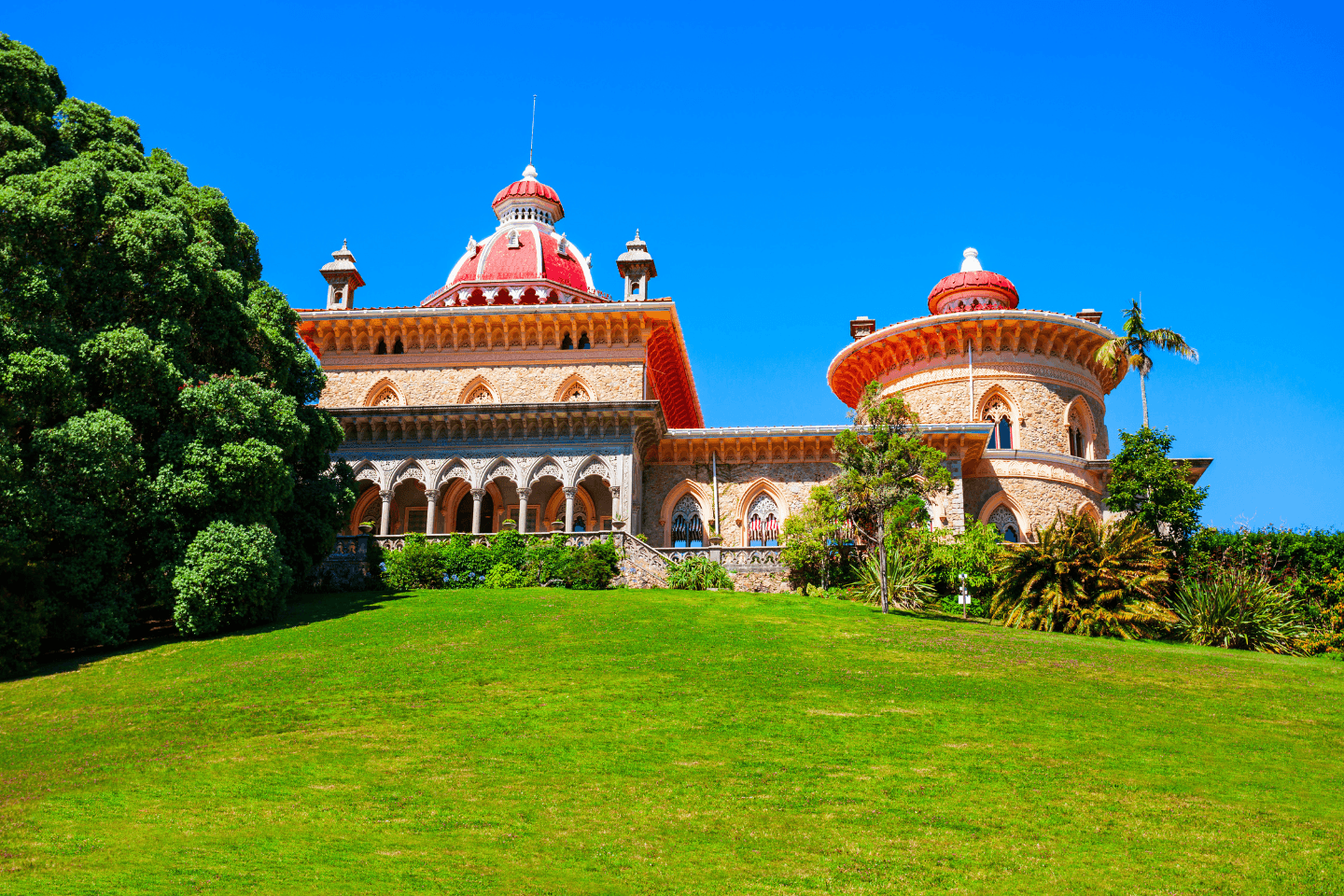
Monserrate Palace: Where Kings, Millionaires and Writers Found Inspiration
Long before it became one of Sintra's most beautiful palaces, Monserrate welcomed poets, aristocrats, and visionaries from across Europe. Discover the remarkable story of the estate that inspired Lord Byron, was transformed by a wealthy British collector, and became one of Portugal's greatest Romantic masterpieces.
Our Soul
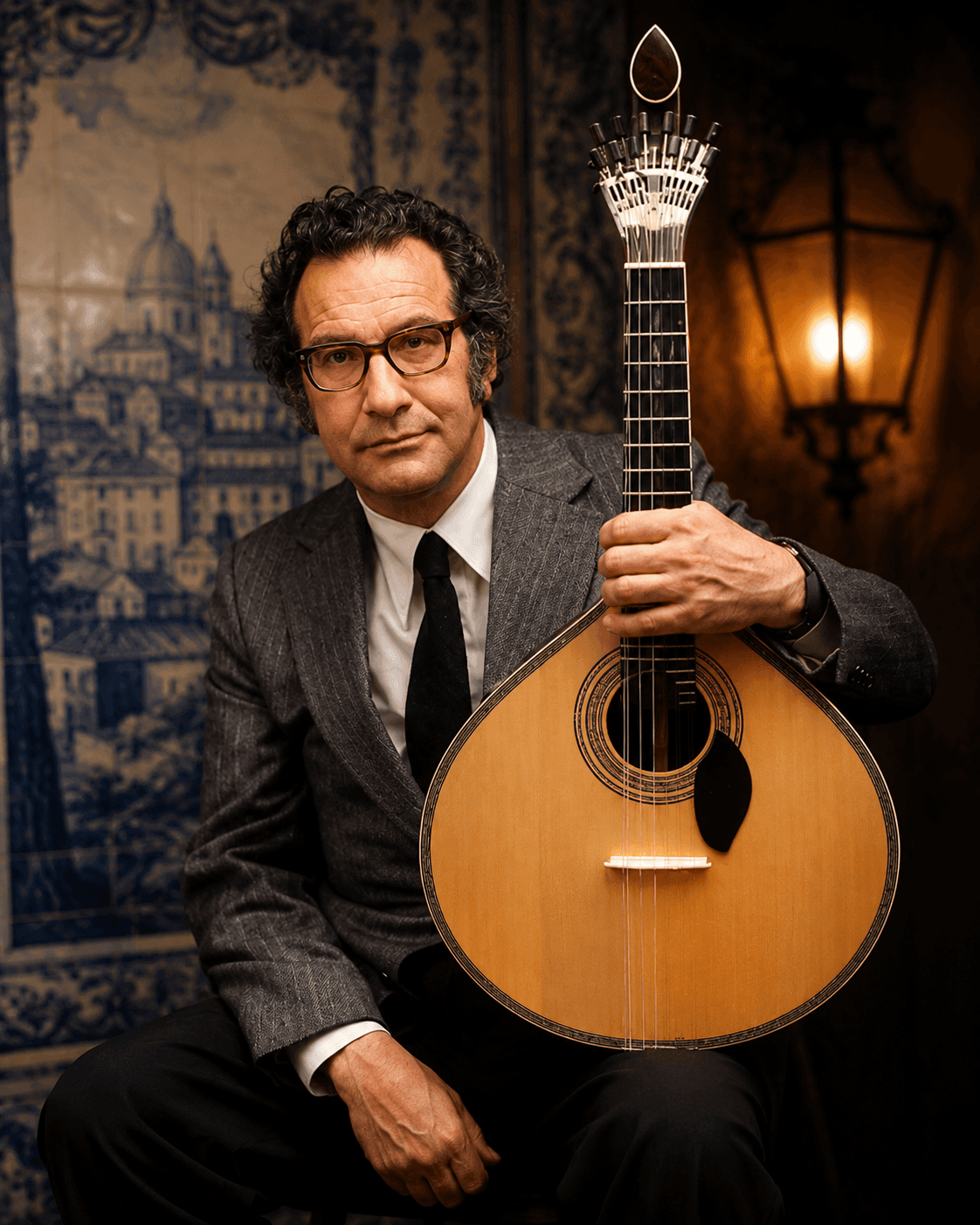
Carlos Paredes: The Man Who Made the Portuguese Guitar Speak
Carlos Paredes transformed the Portuguese guitar into one of the world's most expressive instruments. Through extraordinary talent, resilience, and a deep love for Portugal, he created music that still echoes through Lisbon's streets, carrying the soul of a nation without ever needing a single word